

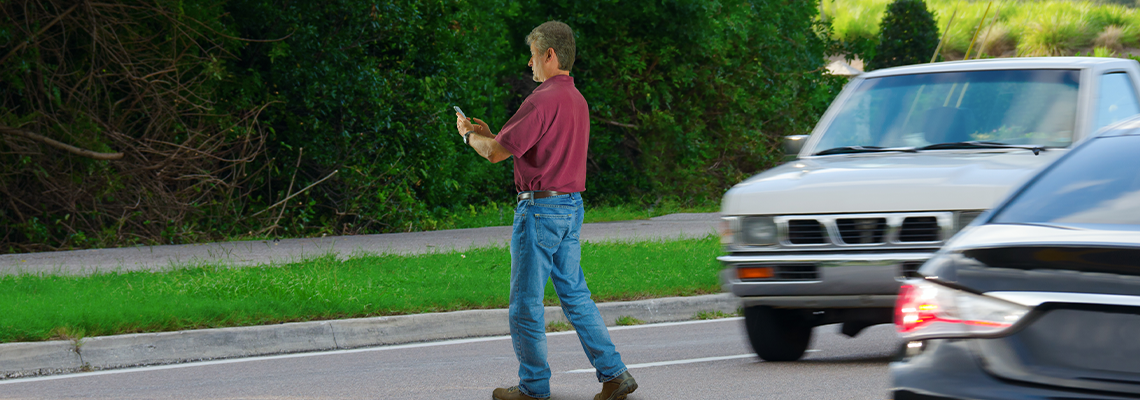
Can You Sue if You Were Hit While Jaywalking?
Getting hit by a car can be frightening, and it can also raise immediate questions about fault and medical bills. If you were crossing outside a crosswalk, you might assume you have no rights at all. In Florida, that isn't always true. Liability can turn on what both the driver and the pedestrian did in the seconds before impact.
A jaywalking allegation can affect a claim, but it doesn't automatically end it. The details that matter most include where you crossed, what traffic controls were nearby, what the driver could see, and how the collision happened.
At Oldham & Smith Attorney at Law, we provide guidance after serious crashes, including incidents involving pedestrians. We proudly serve clients in Eustis, Groveland, and Leesburg, Florida, as well as the greater Lake County area.
How Jaywalking Affects a Claim in Florida
Jaywalking is a broad term people use for crossing the street in a place or manner that the law doesn't allow. In many situations, Florida expects pedestrians crossing outside a marked or unmarked crosswalk to yield to vehicles already on the roadway.
There are also areas where pedestrians are expected to use crosswalks when traffic signals are operating at adjacent intersections. If a pedestrian crosses anyway, that choice can be used to argue the pedestrian shares fault.
Expectations That Drivers Are Held To
Drivers don't get a free pass to collide with someone simply because the person wasn't in a crosswalk. Drivers are still expected to use reasonable care, keep a proper lookout, and respond to hazards they should see.
A case may hinge on whether the driver had time to react, whether the driver was paying attention, and whether speeding or other conduct made the crash unavoidable. With that baseline in mind, the next question is when a claim can still move forward.
When You Can Still Sue After Jaywalking
A pedestrian can sometimes pursue a claim even when the crossing wasn't ideal, especially when the driver contributed to the collision in a meaningful way. The focus is usually on what could’ve prevented the impact and whether the driver failed to act reasonably under the circumstances.
When you evaluate the facts, it helps to look at issues like these:
Driver distraction or inattention: Phone use, eating, or looking away can reduce reaction time and stopping distance.
Speeding or unsafe speed for conditions: Higher speeds can limit braking time, especially at night or in poor weather.
Failure to use headlights or poor visibility choices: Driving without proper lighting can make a pedestrian harder to see sooner.
Impairment or fatigue: Alcohol, drugs, or exhaustion can slow judgment and affect lane control.
Even if a pedestrian shares some blame, a claim can still be worth pursuing if the driver also bears fault. That leads directly to comparative fault, the system Florida uses to apportion responsibility between the parties.
Comparative Fault and the 50% Bar
Florida uses a modified comparative fault approach for many negligence cases. In practical terms, that means responsibility can be divided between the pedestrian and the driver based on the evidence. If the pedestrian is assigned some percentage of fault, the value of any recovery is typically reduced by that percentage.
If the pedestrian is found more than 50% at fault, recovery may be barred in many cases. Because fault percentages matter so much, the same set of facts can look very different depending on how they're presented and supported.
A driver may argue the pedestrian darted out with no time to stop, while the pedestrian may point to speeding or inattention that eliminated a safe response. The more clearly the evidence shows what happened, the easier it is to evaluate how fault could be allocated. That makes the quality of proof a central part of these claims.
Evidence That Can Shape Liability
Pedestrian crashes often happen quickly, and memories can change after a stressful event. The strongest cases are usually built on objective details that show where each person was, what could be seen, and how the driver responded.
When a pedestrian is accused of jaywalking, these kinds of records can be especially important:
Scene photos and measurements: Images of skid marks, lighting, lane layout, and sight lines can help explain visibility and timing.
Surveillance or dash camera footage: Video can show the crossing path, traffic signal timing, and driver behavior.
Witness statements: Independent observations can clarify speed, braking, and whether the driver appeared distracted.
Medical documentation: Treatment records can connect injuries to the impact and help explain how the collision affected daily life.
Good evidence can also address disputes about where the pedestrian entered the roadway and whether the driver had a clear chance to avoid contact. Once liability is evaluated, the conversation often shifts to defenses that might be raised and how to respond to them in a focused way.
Defenses That Drivers and Insurers May Raise
Drivers and insurers may try to place most or all blame on the pedestrian, particularly when the pedestrian crossed outside a crosswalk. They may argue the pedestrian violated a safety rule, appeared suddenly, or created an unavoidable hazard. They may also challenge the seriousness of injuries or argue that the medical issues stem from something else.
A careful review of timing, visibility, and driver conduct can narrow the real dispute. For example, a defense about "no time to stop" may depend on speed, distraction, and sight distance. Once defenses are identified, it helps to focus on what you can do right away after a crash to protect your claim.
Steps to Take After a Pedestrian Crash
The steps you take after a crash can affect medical recovery and also the strength of any legal claim. Even if you're worried you crossed in the wrong place, it's still important to document what happened and get care.
If you're able, these steps can help preserve useful information:
Get medical care right away: Prompt evaluation protects your health and creates records tied closely to the collision.
Call law enforcement and report the crash: A report can document the location, the parties, and initial observations.
Photograph the scene and your injuries: Capture lighting, traffic controls, lane markings, and visible injuries.
Collect contact information for witnesses: Names and numbers can be critical if accounts differ later.
You should also avoid guessing about fault when you're shaken or in pain. Stick to what you know, and let the evidence tell the story. If there are videos nearby, acting quickly can help preserve them before they're overwritten. From there, one of our lawyers at Oldham & Smith Attorney at Law can help evaluate comparative fault issues and next steps.
Experienced Legal Advocacy
If you were hit while jaywalking, you may still have options depending on what the driver did and how fault is evaluated. Our attorneys at Oldham & Smith Attorneys at Law serve clients in Eustis, Groveland, and Leesburg, Florida, and the greater Lake County area. Contact our firm to discuss what happened and what steps may be available in your situation.
